
About EATRIS
The European Infrastructure for Translational Medicine (EATRIS) is a pan-European research infrastructure operating as a European Research Infrastructure Consortium (ERIC). It brings together cutting-edge facilities, research expertise, and technology platforms dedicated to accelerating the translation of scientific discoveries into new diagnostics, therapeutics, vaccines, and other medical interventions. By supporting all stages of the translational process, from target discovery and biomarker development to preclinical validation and early clinical application, EATRIS helps reduce development risks, shorten innovation timelines, and enhance the reproducibility and quality of translational research.
In the Czech Republic, the national network EATRIS-CZ integrates ten major research institutions and universities into this European framework. Each participating institution contributes complementary technological capacities and scientific expertise, enabling Czech research teams and industrial partners to benefit from coordinated access to sophisticated methodologies, shared infrastructure, and international collaboration opportunities. The Institute of Microbiology of the Czech Academy of Sciences (IMIC) is one of these partner institutions, contributing its specialized research environment to the national node.
By being part of EATRIS-CZ and the wider European EATRIS community, Czech academic and industrial users gain entry into a structured ecosystem that promotes cooperation across disciplines, facilitates knowledge exchange, and strengthens Europe’s collective capacity to translate biomedical discoveries into tangible societal benefits. This integration ensures that Czech research is embedded in a high-quality, internationally interconnected infrastructure dedicated to advancing translational medicine.
Open-Access Services at the IMIC EATRIS-CZ
The IMIC EATRIS-CZ offers a broad spectrum of open-access services, providing users with advanced experimental capabilities and expert support across molecular biology, protein engineering, infection research, and preclinical model systems.
Design & Cloning, Production & Purification of Recombinant Proteins
The IMIC EATRIS-CZ provides end-to-end recombinant protein production, covering the entire workflow from gene to highly purified product, supporting both basic biomedical research and vaccine development. Available services include:
- Construct design using SnapGene, Clone Manager, and DNASTAR Lasergene
- DNA template preparation
- Plasmid construction using a wide selection of expression vectors and cloning enzymes
- Verification of final constructs (electrophoretic and gel documentation systems, sequencing)
- Recombinant protein expression in bacterial systems (various expression strains, thermostatic rooms, shakers, fermenters)
- Cell disruption and protein solubility testing
- Protein purification (affinity, ion-exchange, and size exclusion chromatography using FPLC and HPLC systems)
- Protein concentration and dialysis
- Efficient removal of lipopolysaccharide contaminants to obtain endotoxin-free proteins suitable for immunological assays, vaccination studies, and translational applications
- Assessment of protein purity, concentration, and identity
Genetic Modifications of Pathogenic Bacteria
- Construction of deletion, insertion, and point mutations in genes of various pathogenic bacteria
- Verification of engineered strains by sequencing
Functional In Vitro Testing of Proteins and Bacterial Strains
- Detailed analysis of the effects of virulence factors, recombinant proteins, and bacterial strains on cell lines and primary human cells, including assessments of gene expression, signaling pathways, cell physiology, and survival
- Investigation of host–pathogen interactions such as bacterial adhesion, invasion, and intracellular persistence
- A wide range of analytical methods is available, including fluorescence microscopy, flow cytometry, RT-qPCR, Western blotting, ELISA, bead-based immunoassays, and related techniques
- An advanced air–liquid interface (ALI) culture system based on polarized primary human nasal epithelial cells, enabling precise evaluation of epithelial barrier integrity using the ECIS TEER24 system during exposure of cells to virulence factors or bacterial infection
- A planar lipid bilayer system for precise measurement of single-pore characteristics of pore-forming toxins and other membrane-active proteins
In Vivo Testing of Bacterial Strains in Mouse Models
Several genetically modified mouse strains with defined impairments in innate and adaptive immunity are available for analysis of virulence factor function and evaluation of vaccine antigen candidates. Available models include:
- MyD88 knockout mice lacking most TLR signaling pathways
- TLR2 and TLR4 knockout mice for assessing the impact of endotoxin contamination on vaccine antigen efficacy
- Mouse lines deficient in complement components (C3, C4b, C4BP), providing a unique opportunity to establish infection models for human-specific pathogens that normally do not infect mice
Contacts



IMIC EATRIS-CZ Instruments
The IMIC EATRIS-CZ provides open access to its instrumentation, enabling academic and industrial users to apply state-of-the-art technologies in support of their basic, applied, and translational research.

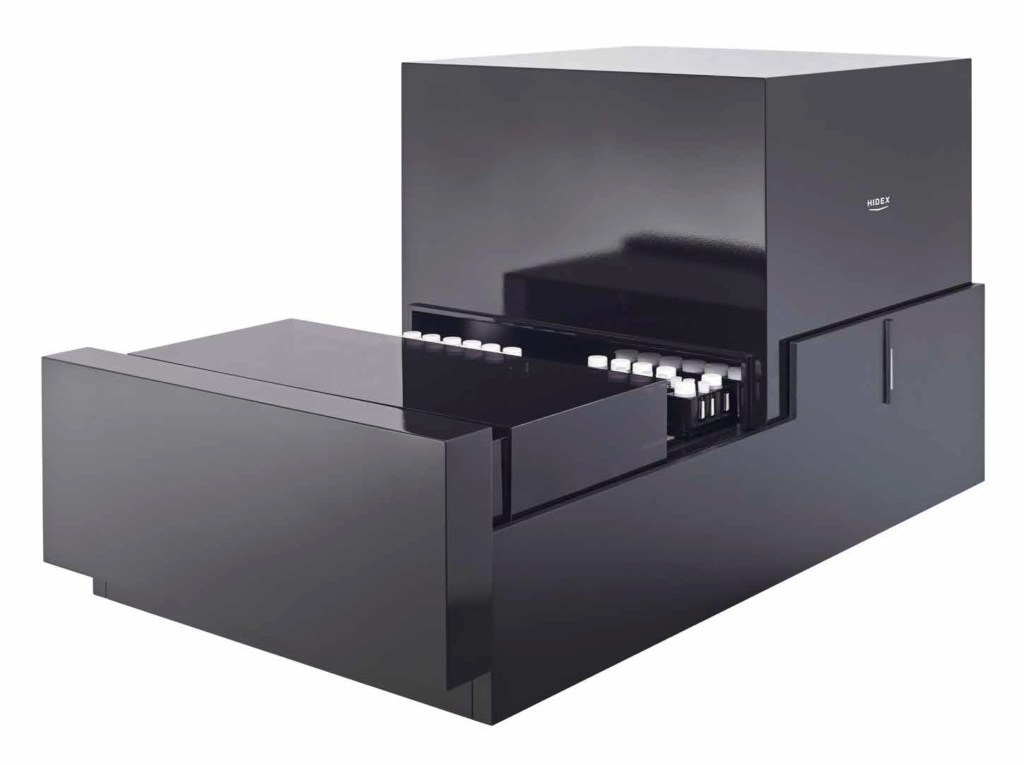
Liquid Scintillation Counter Hidex 600 SL
The Liquid Scintillation Counter Hidex 600 SL is a modern instrument designed for precise radioactivity measurements using liquid scintillation spectrometry. It enables detection of low-energy beta emitters such as tritium (H-3), carbon-14 (C-14), and sulfur-35 (S-35) with high sensitivity and very low background. A triple photomultiplier system provides excellent signal-to-noise discrimination, ensuring reliable results. The instrument supports automated processing of up to 600 samples and features an intuitive user interface. It is widely used in biology, pharmacology, and environmental research.

Optima MAX-XP Ultracentrifuge
The Beckman Coulter Optima™ MAX-XP is a microprocessor-controlled benchtop ultracentrifuge capable of generating very high centrifugal forces for a broad range of experimental applications. It is equipped with a variable-frequency induction drive, thermoelectric temperature control, a self-purging vacuum system, rotor overspeed protection, and programmable acceleration and deceleration profiles. The instrument is used for the separation and isolation of small particles such as viruses, bacteria, and subcellular organelles, as well as larger biomolecules.
ECIS TEER24 Station
The ECIS TEER24 Station is designed to carry out trans-epithelial/endothelial electrical resistance measurements using ECIS (electric cell-substrate impedance sensing) technology to monitor the barrier function of cell layers grown on membrane insert filters. Data are collected continuously from up to 24 independent wells and reported as real-time barrier function changes in Ω/cm2.


4D-Nucleofector
The 4D-Nucleofector System by Lonza is an advanced electroporation platform designed for highly efficient, non-viral transfection of primary, non-dividing, and hard-to-transfect cells. It combines precision and flexibility, enabling optimized delivery of DNA, RNA, or proteins into a wide variety of cell types. The system consists of a Core Unit, which controls the overall operation, and an X Unit, designed for nucleofection of different cell numbers and formats. With its intuitive touchscreen interface and smart software control, the 4D-Nucleofector ensures reproducible results, scalability, and ease of use for both research and biotechnological applications.
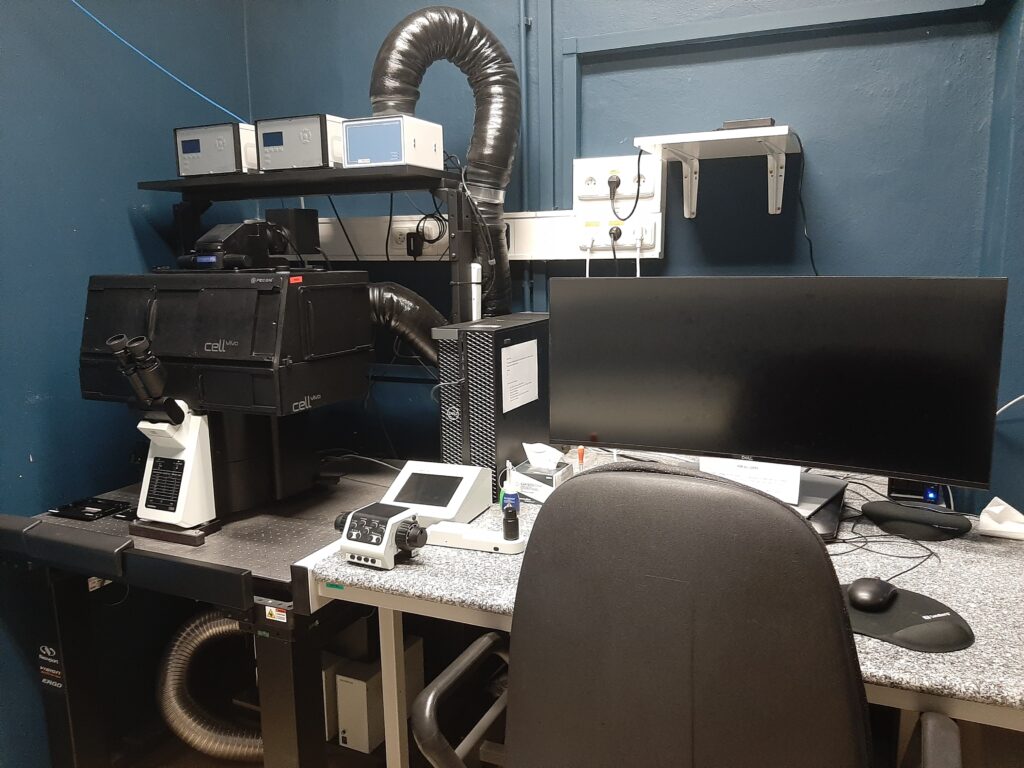
Olympus IX83 Microscope
The Olympus IX81 is an inverted microscope designed for advanced live-cell imaging. It is equipped with optics for differential interference contrast and phase contrast, enabling detailed observation of cellular morphology without staining. The microscope also features a fast excitation and emission filter wheel, allowing rapid multicolor 3D fluorescence imaging. A motorized X-Y-Z stage supports precise multi-position imaging and time-lapse experiments, while compatibility with an incubator for temperature, CO₂, and humidity control enables long-term live-cell studies. This setup is ideal for a wide range of applications in cell biology and cytology.
BioLector XT Microbioreactor
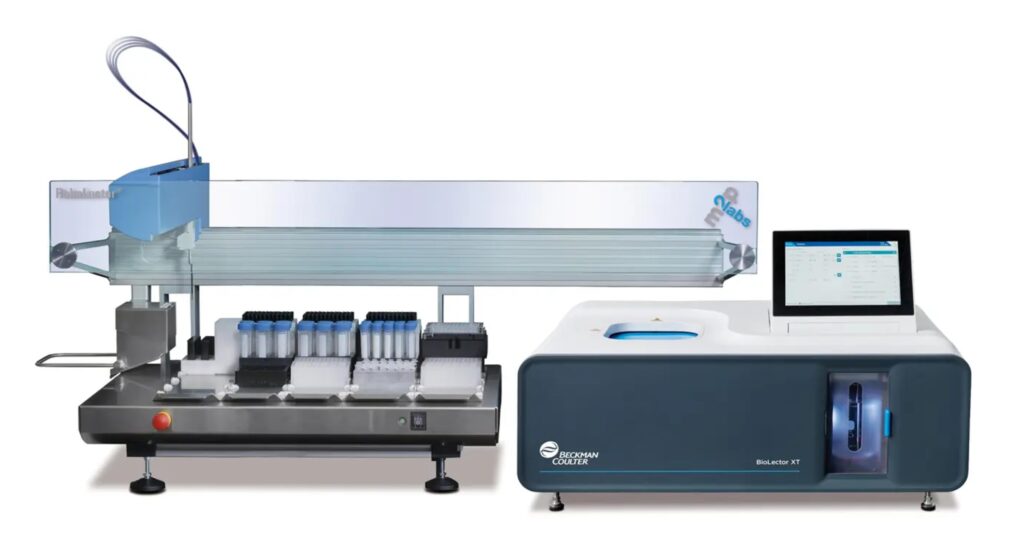
The BioLector XT microbioreactor is a high-throughput cultivation system designed for real-time monitoring of biomass, fluorescence, pH and dissolved oxygen in microtiter-plate format cultivations. It supports up to 48 parallel reactions and features an optional microfluidic module for automated feeding and well-specific pH control. The RoboLector platform integrates the BioLector XT with a robotic liquid-handling system, enabling fully automated media preparation, sampling, dosing and process control in parallel cultivations. Together, these systems offer a powerful solution for microbial expression screening, fermentation optimization and scalable bioprocess development.
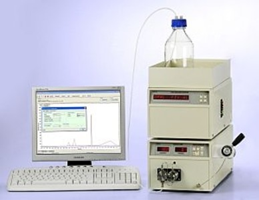
HPLC System ECOM
The ECOM HPLC system is a modular platform designed for precise and reliable liquid chromatography. It features the Beta‑10 Plus gradient pump for accurate solvent mixing and flow control, and the DG‑4014 degasser box with four channels to continuously remove dissolved gases, ensuring stable baselines. The OPAL fixed‑wavelength detector monitors UV‑VIS absorption at a single wavelength, providing both analog and digital outputs. Solvent routing and gradient formation are managed by the Spider Mixing Unit, which contains the switching valves. Together, these four modules enable high‑performance separations with gradient elution, reproducible results, and versatile analytical capabilities.
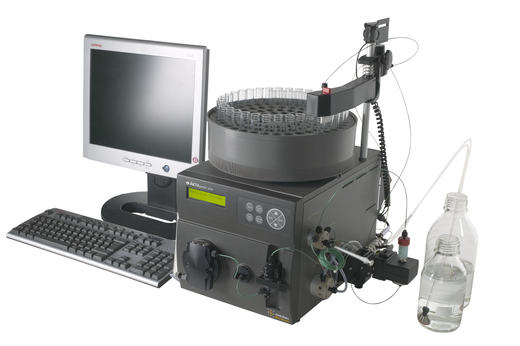
ÄKTAprime Plus
ÄKTAprime Plus is a flexible chromatography system designed for routine purification tasks at the laboratory scale. It supports buffer exchange, gel filtration, ion exchange, hydrophobic interaction, and affinity chromatography. The system includes preprogrammed methods for common applications such as purification of affinity-tagged proteins, monoclonal antibodies, and sample clean-up prior to further analysis. Integrated pump, detector, and valve modules ensure fully automated operation with precise control of flow rate and gradient formation. ÄKTAprime Plus provides a reliable solution for protein and biomolecule purification in academic laboratories.
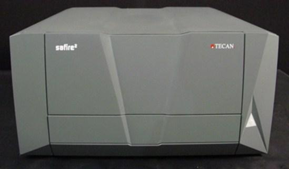
Tecan Safire 2 Plate Reader
The Tecan Safire 2 Plate Reader is a versatile, monochromator-based microplate reader designed for demanding research and high-throughput screening. It supports absorbance measurements from 230 to 1000 nm and fluorescence excitation and emission from 230 to 850 nm, enabling precise UV-Vis and fluorescence assays. The system accommodates plate formats from 6-well to 1536-well and offers temperature control from approximately 4 °C above ambient up to 42 °C, with optional orbital or linear shaking. Adjustable slit widths (2.5–12 nm) and wavelength precision of ±1 nm ensure accurate and reproducible results, making the Safire 2 ideal for applications in molecular biology, biochemical analyses, and fluorescence-based research.
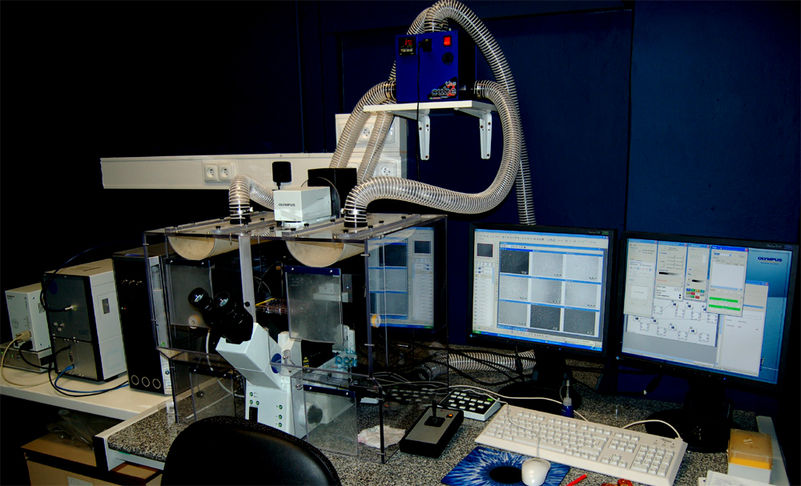
Olympus IX81 Microscope
The Olympus IX81 is an inverted microscope designed for advanced live-cell imaging. It is equipped with optics for differential interference contrast and phase contrast, enabling detailed observation of cellular morphology without staining. The microscope also features a fast excitation and emission filter wheel, allowing rapid multicolor 3D fluorescence imaging. A motorized X-Y-Z stage supports precise multi-position imaging and time-lapse experiments, while compatibility with an incubator for temperature, CO₂, and humidity control enables long-term live-cell studies. This setup is ideal for a wide range of applications in cell biology and cytology.
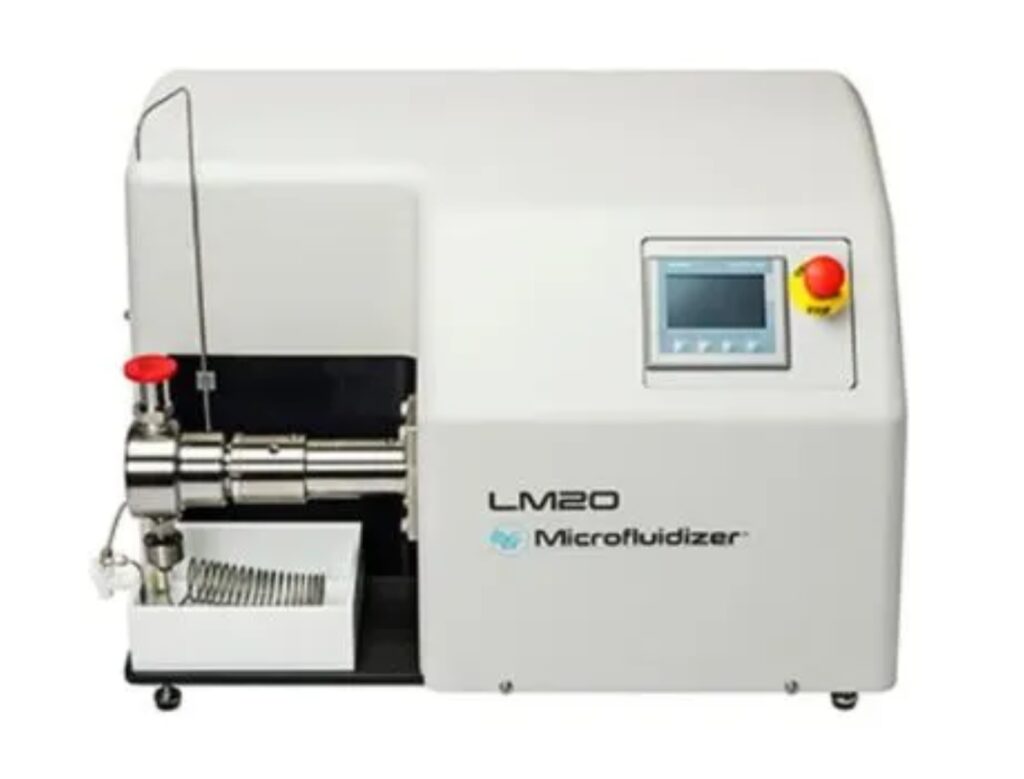
LM20 Microfluidizer
The LM20 Microfluidizer is a high-shear, digitally controlled laboratory homogenizer designed for efficient processing of small sample volumes. Operating at pressures up to 30,000 psi (2,068 bar), it delivers superior cell disruption, nanoemulsion formation, and particle size reduction with excellent reproducibility. The system ensures uniform treatment by forcing samples through fixed-geometry microchannels within a diamond interaction chamber, generating intense shear forces for consistent submicron results. Features include digital pressure control, a 300 ml glass reservoir, and maintenance reminders for reliable long-term use.
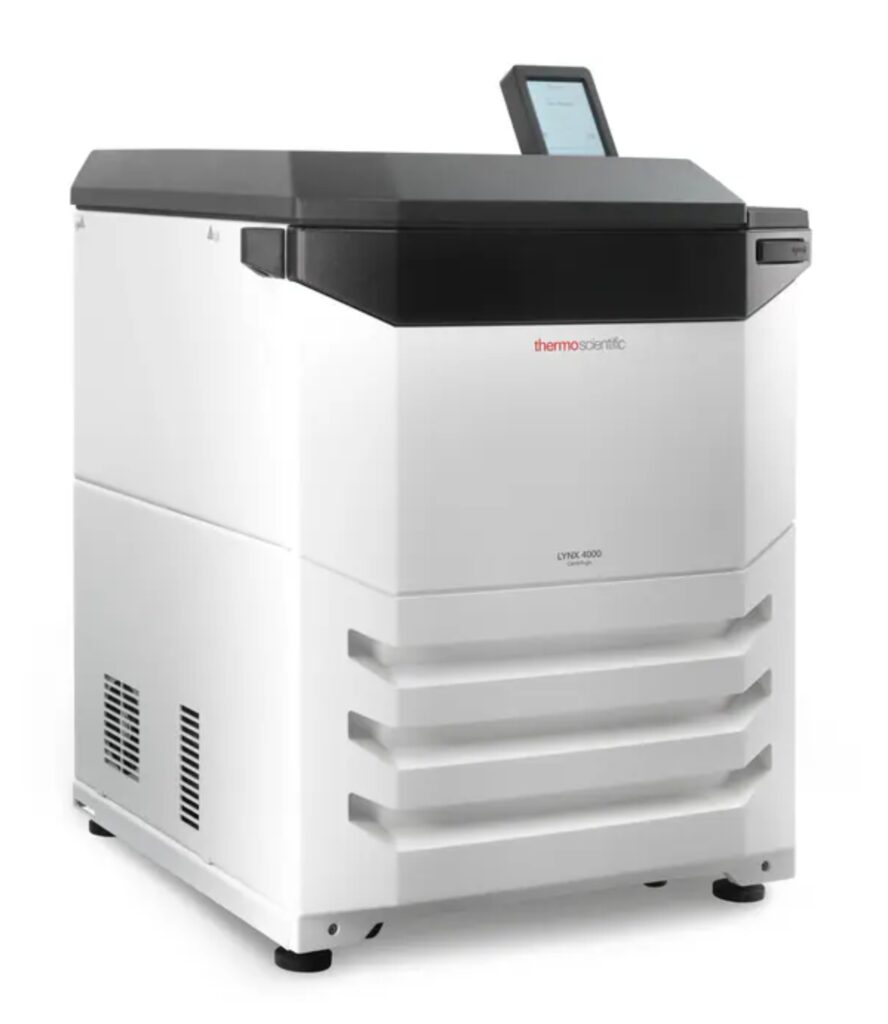
Sorvall LYNX 4000 Centrifuge
The Sorvall LYNX 4000 superspeed centrifuge from Thermo Scientific is a high-performance instrument with a capacity of up to 4 liters and a maximum speed of 68,905 × g. Featuring advanced technologies such as Fiberlite carbon fiber rotors, the Auto-Lock system for quick and secure rotor exchange, and the Auto-ID function for automatic rotor identification, it ensures efficient and safe operation. The centrifuge also enables real-time monitoring and control via smart devices through the Thermo Scientific Centri-Vue application, providing outstanding performance, safety, and user comfort for demanding laboratory workflows.
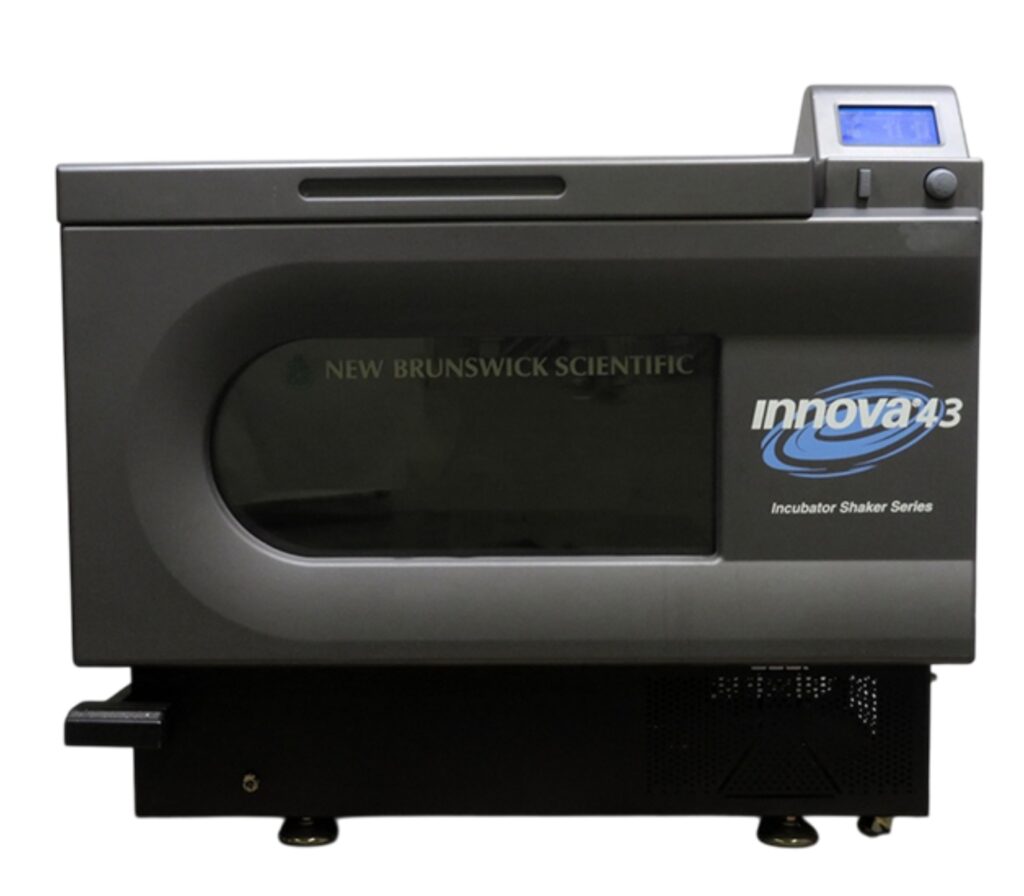
Innova 43 Incubator Shaker
The New Brunswick Scientific Innova 43 Incubator Shaker is a refrigerated, large-capacity orbital shaker designed for reliable cultivation of cell cultures. Its top-loading design allows vertical placement of flasks, making it ideal for handling large volumes with precision and ease. The shaker offers a wide temperature range for controlled incubation and uniform shaking motion to ensure consistent aeration and growth. Convenient features such as a foot-pedal operated lid and a side viewing window enable easy sample access and monitoring without disturbing temperature stability. The Innova 43 combines durability, accuracy, and user-friendly design trusted in laboratories worldwide.
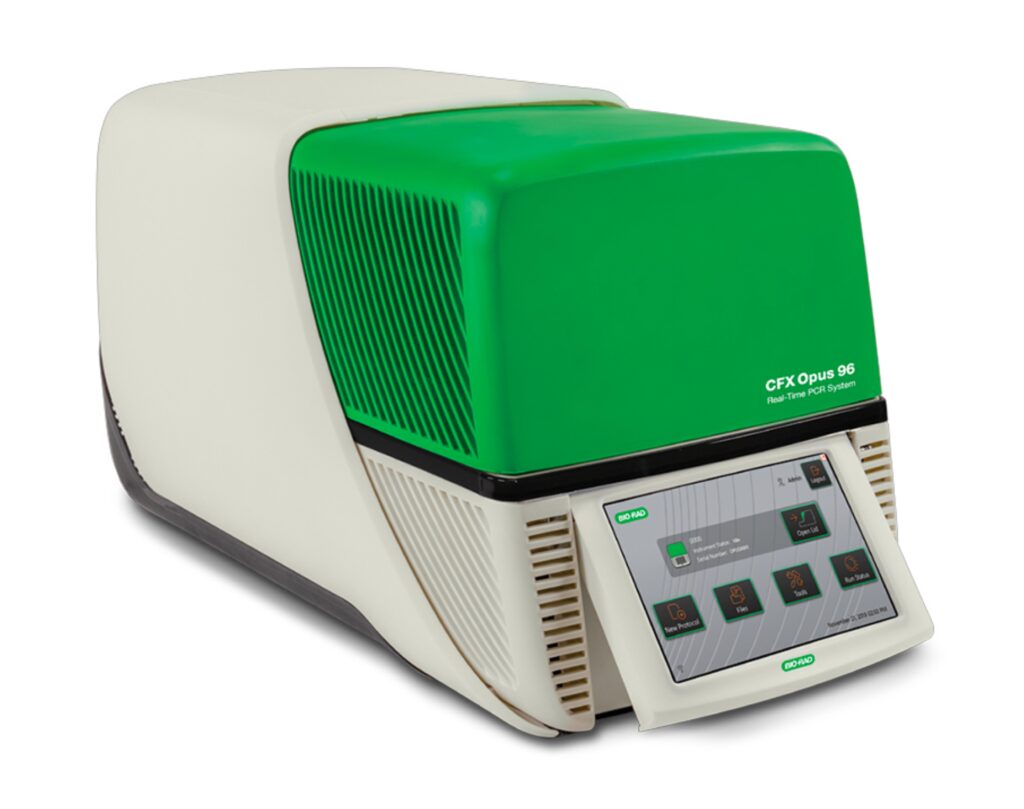
Real-Time PCR System CFX Opus 384
The Bio-Rad CFX Opus 384 Real-Time PCR System is a high-performance qPCR platform designed for high-throughput applications in research and diagnostics. Featuring a fixed 384-well block and advanced optical detection, it delivers excellent thermal uniformity, rapid cycling, and high sensitivity, capable of detecting even a single copy of a target sequence. Its intuitive software interface allows easy experimental setup, data visualization, and comprehensive analysis. The system supports multiplexing of up to four targets per well, enabling efficient gene expression studies, SNP genotyping, and pathogen detection. The CFX Opus 384 combines speed, precision, and flexibility for modern molecular biology workflows.
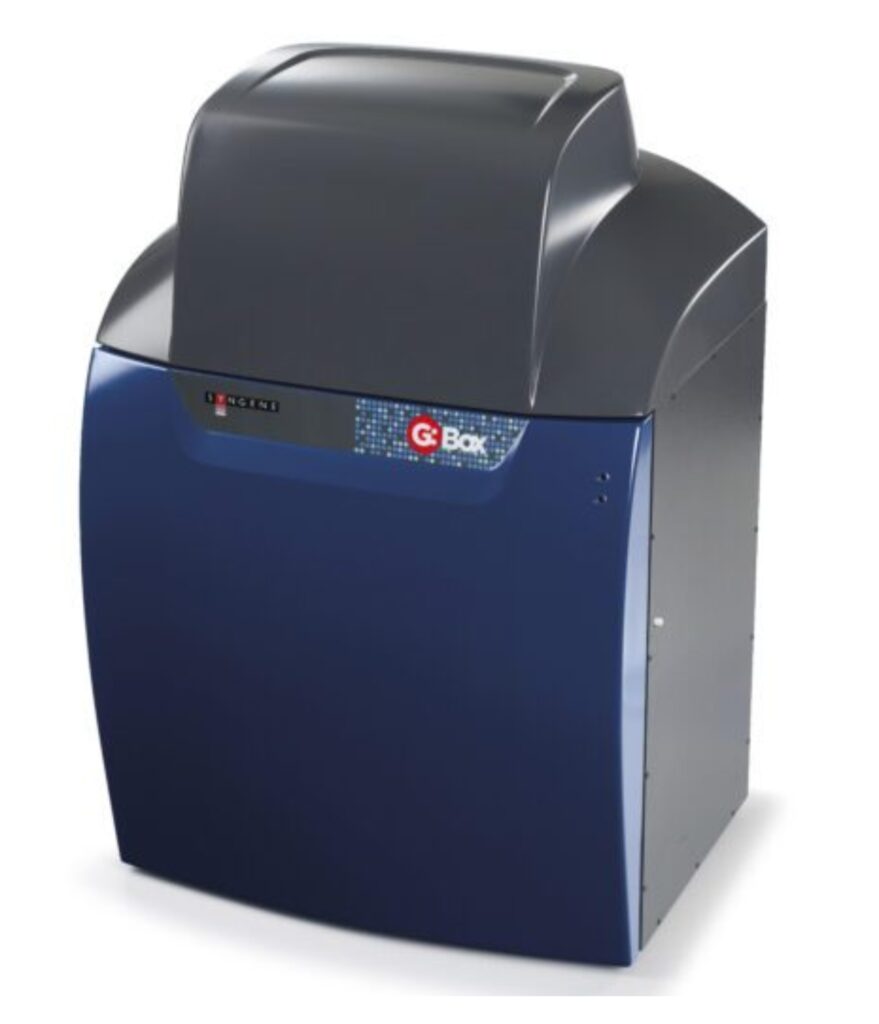
G:BOX Chemi XRQ
The Syngene G:BOX Chemi XRQ gel documentation system is equipped with a next-generation CCD camera offering high quantum efficiency and exceptionally low noise, making it ideal for extended fluorescence applications and chemiluminescent Western blot imaging. The 4-megapixel CCD sensor delivers sharp, high-resolution images with outstanding sensitivity. Like all Syngene Chemi systems, the camera is Peltier-cooled to ensure virtually noise-free performance and uniform background quality. Whether used for standard fluorescence imaging of DNA gels or for sensitive chemiluminescence detection, the G:BOX Chemi XRQ provides consistently high-quality, publication-ready results.
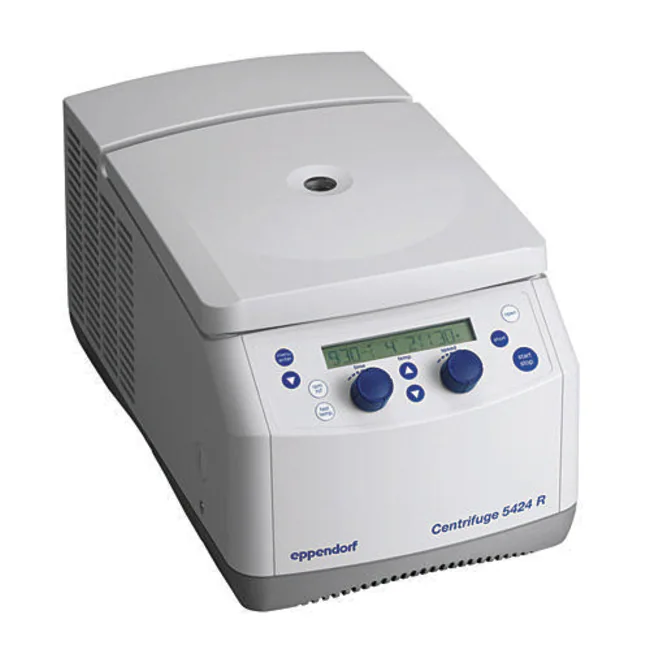
Eppendorf Centrifuge 5424 R
The Eppendorf 5424 R Cooled Centrifuge is a compact, high-performance instrument designed for modern molecular biology workflows. It provides a maximum relative centrifugal force of 21,130 × g and a precisely controlled temperature range from –10 °C to +40 °C. With capacity for 24 microcentrifuge tubes, it supports a wide variety of applications, including DNA/RNA purification, protein extraction, and PCR setup. The 5424 R features the innovative OptiBowl design for whisper-quiet operation, an intuitive digital display with knob-based controls, a soft-touch one-finger lid closure, SOFT brake for gentle sample deceleration, a short-spin key for rapid runs, and automatic lid opening at the end of each cycle — combining convenience, safety, and precision in one reliable system.
Sterilizer UNISTERI HP IL 636-2 ED
The UNISTERI HP IL 636-2 ED steam sterilizer is designed for the sterilization of culture media, solutions in open or closed bottles, solid or porous materials, as well as for the decontamination of used materials and the disposal of pathogenic microbial samples. With programmable sterilization cycles, precise temperature and pressure control, and advanced safety features, it ensures reliable and reproducible sterilization results. Its compact design and user-friendly interface allow for easy and safe operation in routine laboratory workflows.
